
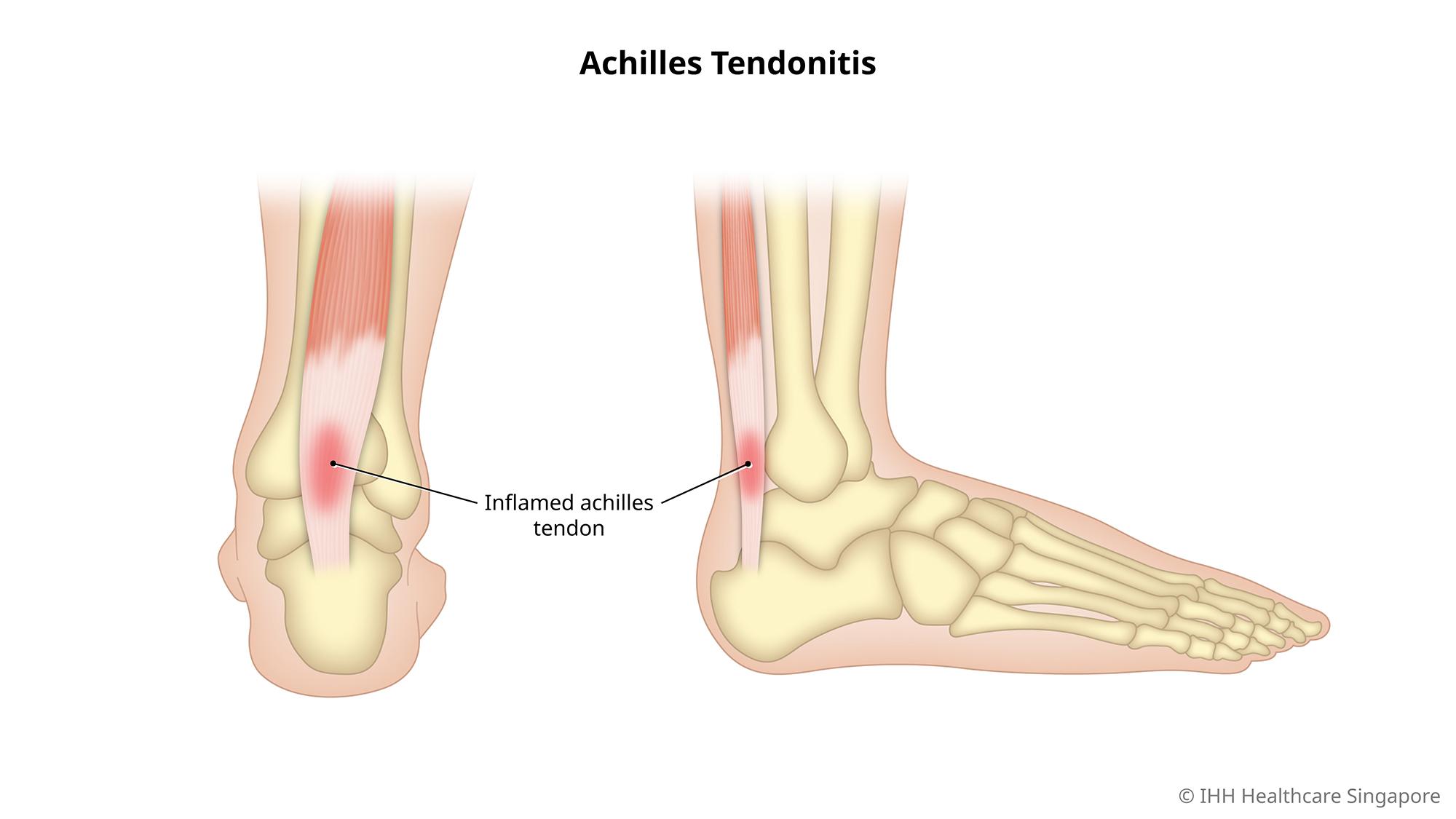
Achilles Tendonitis

Achilles tendonitis, an inflammation of the Achilles tendon, is a condition that arises when the fibrous tissue linking the calf muscle to the heel bone becomes irritated. This vital tendon is situated at the rear of the ankle joint, resembling a sturdy cord. It plays a pivotal role in elevating the heel during fundamental activities like walking, running, or leaping.

This condition is often a result of overuse, where repetitive or heightened activity exerts undue strain on the Achilles tendon, causing micro-injuries. Due to this prolonged stress, the body struggles to efficiently mend the impaired tendon, leading to discomfort.

Noteworthy indications of Achilles tendonitis encompass pain, tenderness, stiffness, or aching in the Achilles tendon. Applying pressure by squeezing the tendon can provoke further pain or tenderness, and noticeable swelling may be present.

Certain factors can heighten the risk of developing Achilles tendonitis, such as occasional participation in athletics (commonly referred to as “Weekend Warriors”), sudden episodes of intense activity like extended walks or hikes, and having flat feet or experiencing excessive pronation (where the arch flattens).

At Locke Street Minor Foot Surgery & Orthotics, our dedicated Foot Specialists play a crucial role in crafting tailored treatments for Achilles tendonitis. Our approach typically commences with non-invasive, conservative methods:

  1. Immobilization: This may involve the use of a cast or a removable air cast boot.
  2. Night Splints: These aids in maintaining the Achilles tendon in a fully stretched position during sleep.
  3. Custom-made Orthotics: These are often equipped with a heel lift, designed to mitigate excessive pronation and alleviate stress on the Achilles tendon.
  4. Shoe Modifications: This serves to alleviate pressure on the tendon.
  5. Physical Therapy: Our therapists employ techniques such as ultrasound therapy, soft tissue massage, and specialized stretching and strengthening exercises.

In cases where conservative treatments prove inadequate, surgical intervention may be considered. In such instances, our Foot Specialists, in collaboration with your family physician, will guide you through the most appropriate procedure to repair the damaged tendon.

Preventing Achilles tendonitis is paramount. This includes incorporating daily calf muscle stretching and strengthening exercises, especially before engaging in activities. Equally important is the selection of appropriate footwear, customized to your specific foot type and the nature of the activity at hand. 

Our Foot Specialists at Locke Street Minor Foot Surgery & Orthotics are here to provide expert guidance and personalized care in addressing and preventing Achilles tendonitis.

The condition is often attributed to overuse, where repetitive or increased activity puts excessive stress on the Achilles tendon, leading to micro-injuries. Because of this sustained stress, the body struggles to effectively repair the damaged tendon, resulting in pain.

Common symptoms of Achilles tendonitis include pain, soreness, tenderness, stiffness, or aching in the Achilles tendon. Squeezing the tendon may also elicit pain or tenderness, and swelling may be observed.

Certain factors can increase the risk of developing Achilles tendonitis, such as sporadic participation in athletics (referred to as “Weekend Warriors”), sudden bouts of intense activity like long walks or hikes, and having flat feet or excessive pronation (where the arch flattens).

Treatment options typically begin with conservative, non-surgical approaches. Consulting a foot specialist is essential for determining the most effective course of action. Locke Street Minor Foot Surgery & Orthotics, for instance, offers tailored treatments, including:

  1. Immobilization, which may involve using a cast or a removable air cast boot.
  2. Night splints to maintain the Achilles tendon in a fully stretched position during sleep.
  3. Custom-made orthotics, often with a heel lift, to reduce excessive pronation and alleviate stress on the Achilles tendon.
  4. Shoe modifications to ease pressure on the tendon.
  5. Physical therapy, encompassing techniques like ultrasound therapy, soft tissue massage, and specific stretching and strengthening exercises.

If conservative treatments fail to yield results, surgery may be considered. In such cases, your foot specialist and family physician will guide you through the most appropriate procedure to repair the damaged tendon.

To prevent Achilles tendonitis, incorporate daily calf muscle stretching and strengthening exercises, especially before engaging in activities. Wearing suitable footwear tailored to your specific foot type and the intended activity is crucial in reducing the risk of this condition.