
Fungal Toenails
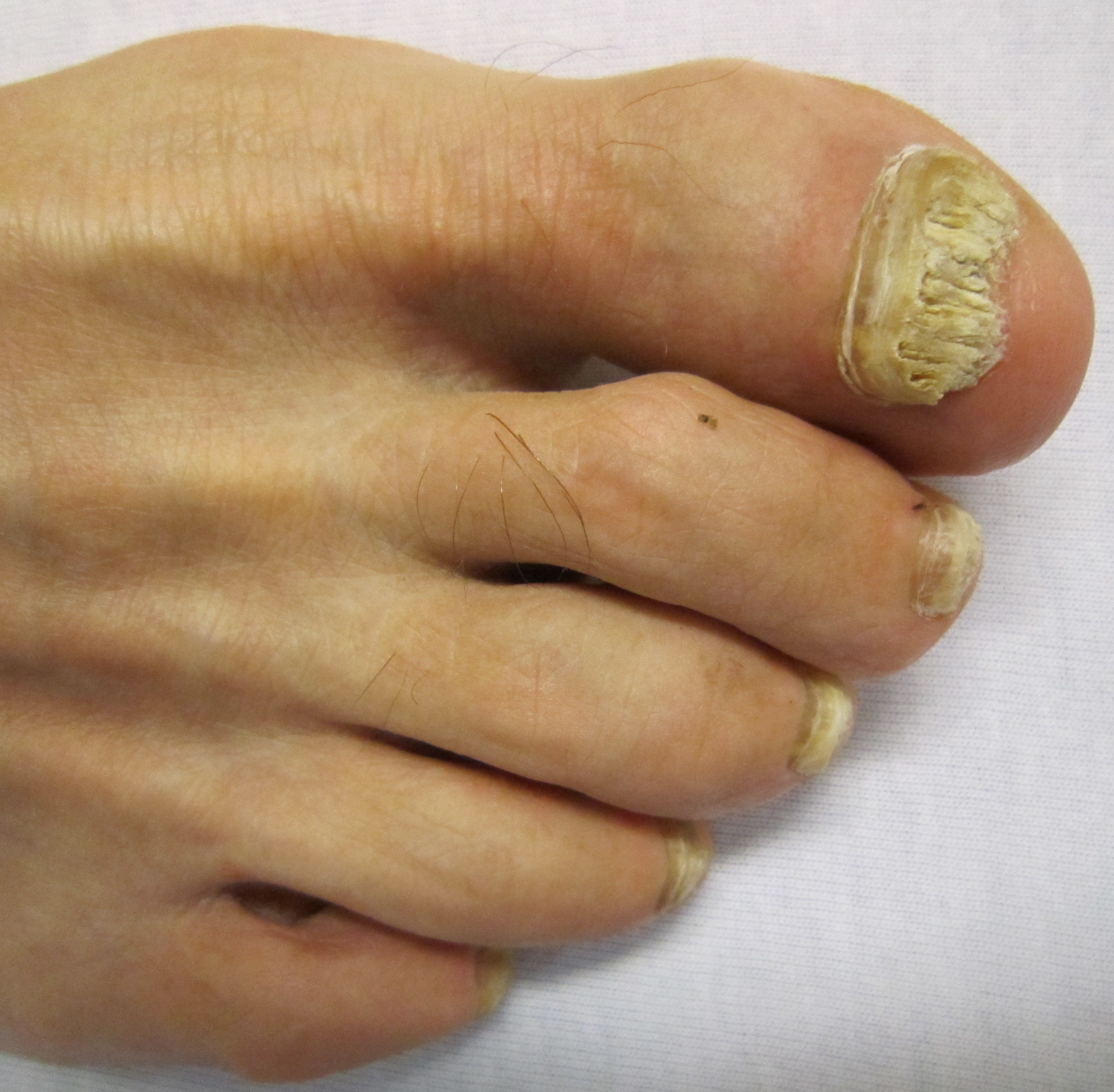
Fungal toenail infection, or onychomycosis, can change a nail’s colour, thickness and texture. Nail injury and some skin conditions can look similar, so confirming the cause helps avoid unnecessary treatment.
What you may notice
- Yellow, white or brown discolouration
- A thick, crumbly or brittle nail
- Debris beneath the nail or separation from the nail bed
How we assess it
We examine the nails and skin and review your health and previous treatments. A nail sample may be recommended before treatment, particularly when oral medication is being considered.
Treatment and next steps
Options may include prescription topical treatment, professional thinning of the nail and, where appropriate, oral medication through a suitable prescriber. Nail treatment takes time because healthier nail must grow out. Results and recurrence vary; no option guarantees a permanently clear nail. Managing athlete’s foot and keeping footwear dry can help.
When to seek care
Seek earlier advice if you have diabetes, reduced circulation, pain or inflamed skin around the nail.
Before choosing fungal nail treatment
Bring a list of previous medicines, nail products and procedures, including how long each was used. Changes from injury can resemble fungal disease, so the examination and any recommended testing matter more than choosing a treatment from a photograph.
How will I know whether treatment is helping?
Ask which change to watch for and when to return. Nail appearance changes slowly as the nail grows. A plan should include a review point rather than repeated treatment without reassessment.
Is laser a guaranteed cure?
No treatment should be presented as a guaranteed cure. Ask about the evidence, alternatives, cost and realistic expectations for your nail. Medication suitability and safety also need individual review.
Our guide to thick or discoloured nails explains questions to raise before committing to treatment.
Foot care in Hamilton & Stoney Creek
Navraj (Nav) Sekhon and Elias Mohamed, chiropodists at Locke Minor Foot Surgery & Orthotics, can assess your concern and explain the next step. No referral is needed to book.